
- This event has passed.
Radiopharmaceuticals: radionuclides and vectors
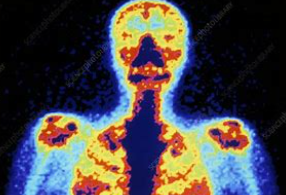
Radiopharmaceuticals are radioactive pharmaceuticals for diagnostic or therapeutic use and typically consist of a radionuclide and a vector molecule. Radionuclides for diagnostic use typically have a short half-life and emit gamma rays that can be detected outside of the body using single photon tomography (SPECT) or positron emission tomography (PET) camera’s that generate an image corresponding to the local concentration of the radionuclide. Radionuclides for therapy typically emit particulate radiation (alpha, beta-minus, Auger electrons) that generate a high radiation dose at a close range to the radionuclide.
The radionuclides are chemically coupled to specific molecules (“vectors”) that guide the radionuclides tot their target in the body and are crucial to generate high signal/noise images of the target tissue or cells (diagnostic use) or to selectively irradiate target (tumor) cells (therapeutic use).
General characteristics of currently used radionuclides and vectors will be discussed as well as the production of radiopharmaceuticals.
Timing
18:30: Introduction of the EVL18:35: Presentation by Guy Bormans19:25: Q&A19:45: Drink20:30: End
Presentation material
Please log in ( https://bnsorg.be/login/ ) with your BNS member account to get access to the slides.
2.13.0.02.13.0.02.13.0.0